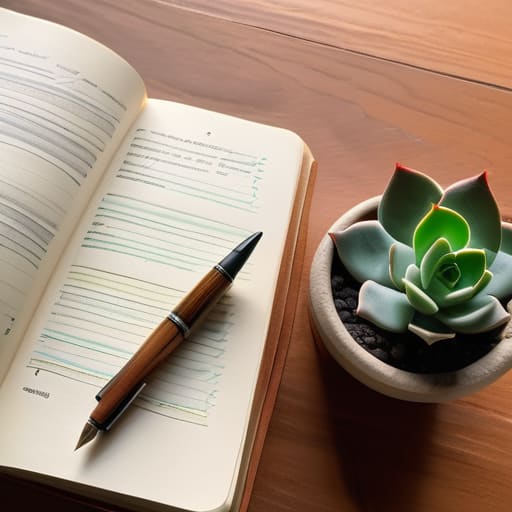

I remember sitting at my kitchen table three years ago, surrounded by half-finished planners and expensive “productivity” journals, feeling completely paralyzed. I had all these grand visions for my career and my health, but every time I tried to figure out how to set goals, I ended up spiraling into this overwhelming web of complex spreadsheets and rigid timelines. It felt less like planning my future and more like building a cage for myself. I was chasing this idea of a perfect, cinematic transformation, but all I really achieved was a massive amount of decision fatigue and a sense of constant failure.
I’m not here to sell you on a life-altering revolution or some complicated five-step framework that requires a PhD to implement. Instead, I want to show you how to build small, repeatable systems that actually stick when life gets messy. We’re going to strip away the hype and focus on practical, low-friction methods that help you reclaim your mental space. My goal is to help you move past the intimidation and start building better foundations through simple, sustainable progress.
Table of Contents
Beyond the Smart Goal Framework Keeping It Real
Look, I’m a big fan of the SMART goal framework—it’s a solid tool for a reason. It forces you to get specific and adds a layer of logic to what can otherwise feel like wishful thinking. But in my experience, especially when life gets messy or work piles up, a rigid framework can sometimes feel more like a cage than a compass. If your goal is too clinical, you might find yourself abandoning the entire system the moment you hit a snag.
The reality is that life rarely follows a straight line. Instead of just checking boxes, I’ve found it much more effective to focus on the rhythm of the process. When I’m working on a furniture restoration project, I don’t just aim for “finished”; I focus on the daily sanding or the specific varnish application. Applying that same logic to your life helps in tracking progress and milestones without the crushing pressure of perfection.
It’s about finding the balance between your big-picture vision and the granular, daily actions. Don’t get so caught up in the high-level theory that you forget to actually move the needle. Sometimes, the best personal development strategy isn’t a complex spreadsheet, but simply a way to keep showing up when the initial excitement wears off.
Balancing Short Term vs Long Term Goals for Stability

I used to think that if I wasn’t staring at a five-year plan, I was failing. But in my experience managing operations, I’ve learned that looking too far ahead can actually paralyze you. If you only focus on the distant horizon, you lose sight of the immediate steps needed to get there. The trick is finding a rhythm between short term vs long term goals so you don’t burn out before you even reach the halfway mark. Think of it like restoring an old chair: you have the grand vision of the finished piece, but you have to focus on the single sanding motion you’re making right now.
To keep things stable, I like to use my notebook to bridge the gap. I’ll write down a major milestone—say, hitting a specific savings target—and then immediately break it down into weekly “micro-wins.” This approach to tracking progress and milestones keeps the momentum alive. When you connect a tiny, daily action to a much larger purpose, the work feels less like a chore and more like a building block. It’s about creating a system where your daily habits are actually serving your future self, rather than just fighting against the clock.
Five Simple Ways to Make Your Goals Actually Stick
- Write them down by hand. I know it sounds old-school, but there’s a neurological connection that happens when you use a pen and paper—like the ones in my pocket notebook—that a digital app just can’t replicate. It forces you to slow down and actually commit to the thought.
- Focus on the “lead measures,” not just the result. Instead of obsessing over losing ten pounds, set a goal to walk for twenty minutes every morning. You can control the walk; you can’t always control the scale. Control the input, and the output usually follows.
- Build “if-then” contingencies into your plan. Life is messy and things will go wrong. If your gym session gets canceled due to a late meeting, then you do ten pushups before dinner. It removes the “all or nothing” mentality that kills most progress.
- Audit your environment for friction. If your goal is to eat better, stop keeping processed snacks in the pantry. If you want to read more, put a book on your pillow every morning. Make the good habits easy to start and the bad habits harder to reach.
- Schedule a weekly “system check.” Every Sunday evening, take ten minutes to look at what worked and what felt like a struggle. Don’t judge yourself; just treat it like an operations report. Adjust the system, don’t just try to “work harder.”
Building Your Foundation

At the end of the day, setting goals isn’t about drafting a rigid, intimidating manifesto that you’ll abandon by next Tuesday. It’s about finding that sweet spot between your immediate needs and your long-term vision. We’ve talked about moving past the clinical rigidity of SMART goals to find something that actually fits your real life, and how to balance those quick wins with the slow, steady work that builds true stability. Remember, the goal isn’t to create a perfect roadmap; it’s to build repeatable systems that keep you moving forward even when life gets messy. If you can manage the small, daily increments, the larger milestones will eventually take care of themselves.
I often find myself looking at a piece of mid-century furniture I’m restoring, and I realize that you can’t rush the process of bringing something back to life. You have to work through the layers, one step at a time, with patience and a steady hand. Your life and your ambitions are no different. Don’t let the pressure of “optimization” rob you of the joy of progress. Just pick one small thing today—one tiny, manageable intention—and start building your foundation. You don’t need to see the whole staircase to take the first step; you just need enough light to see where your foot lands next.
Frequently Asked Questions
How do I know if a goal is actually meaningful or if I’m just chasing something because I feel like I "should"?
I used to fall into this trap all the time—chasing titles or milestones because they looked good on paper. Now, I use a simple litmus test: the “Tuesday Morning Test.”
What do I do when life gets chaotic and I completely fall off my routine for a week?
Look, I’ve been there. Last month, a project at work blew up, and my entire routine went out the window for eight days. When the chaos settles, don’t try to “make up” for lost time—that’s just a recipe for burnout. Instead, pick one single, low-friction habit from your old system and just do that. One small win to signal to yourself that you’re back in the driver’s seat. Start small.
How much time should I actually spend planning my goals versus just getting to work?
I used to fall into the “planning trap”—spending hours color-coding my notebook just to avoid the actual work. It felt like progress, but it was just sophisticated procrastination. Now, I follow a simple rule: aim for the 80/20 split. Spend 20% of your time defining the direction and 80% executing. If you’re spending more time tweaking your system than actually moving the needle, you aren’t planning; you’re just stalling.
Is it better to focus on one big objective at a time, or is it okay to work on a few different areas of my life at once?
I’ve been down both paths, and honestly, the “one big thing” approach usually leads to burnout, while trying to fix everything at once leads to paralysis. I prefer a middle ground: pick one primary focus—like a career pivot—but allow for one or two “maintenance” goals in other areas, like a simple fitness routine. Think of it like restoring a chair; you can’t sand the legs and refinish the seat simultaneously without making a mess. Keep your main project heavy, and keep everything else light.