

I remember sitting at my desk three years ago, staring at a color-coded digital calendar that looked like a game of Tetris gone wrong. I had every minute accounted for, every “deep work” block scheduled, and yet, I still felt like I was drowning. I was obsessed with the wrong kind of productivity, chasing complex apps and expensive frameworks that only added to my mental clutter. The truth is, most advice regarding time management at work is designed to make you feel like a machine, rather than a human being trying to get things done.
I’m not here to sell you on a new software subscription or a twenty-step morning ritual that requires three hours of prep. Instead, I want to share the small, repeatable systems I’ve built to actually protect my focus. We’re going to look at how to strip away the noise and implement a few functional habits that reclaim your mental space. No perfectionism, no fluff—just practical ways to own your day so you can actually leave work at work.
Table of Contents
Simple Systems to Conquer Overcoming Workplace Procrastination

I used to think procrastination was a character flaw—a sign that I just wasn’t disciplined enough. But after years of managing operations, I’ve realized it’s usually just a symptom of feeling overwhelmed by a massive, shapeless to-do list. When everything feels urgent, nothing feels doable. One of the most effective ways I’ve found to combat this is by using the Eisenhower Matrix for productivity. Instead of staring at a mountain of tasks, I categorize them into what’s actually important versus what’s just loud. It takes the guesswork out of where to start, which is often the hardest part of overcoming workplace procrastination.
Once I have my priorities sorted, I move into what I call “defensive scheduling.” I rely heavily on time blocking techniques to protect my focus. Rather than working from a reactive list of emails and pings, I carve out specific, non-negotiable chunks of time in my calendar for deep work. I treat these blocks like a meeting with my boss; I wouldn’t just blow one off, so I don’t blow them off for myself. By creating these predictable rhythms, I stop fighting my own momentum and start working with it. It’s not about doing more; it’s about making sure the right things actually get done.
Effective Daily Scheduling Without the Stress of Perfection
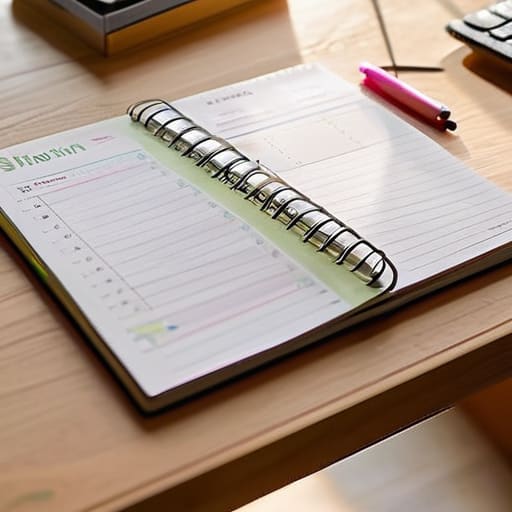
I used to spend my mornings staring at a massive, intimidating to-do list, feeling paralyzed before I even opened my laptop. I thought a “perfect” schedule meant accounting for every single minute, but that approach only led to frustration when reality inevitably intervened. Now, I rely on time blocking techniques to create a loose framework for my day rather than a rigid cage. Instead of saying “I will do X at 9:00 AM,” I designate a block for “Deep Work” or “Administrative Tasks.” This gives me a sense of direction without the crushing pressure of failing a minute-by-minute itinerary.
When the blocks start to feel heavy, I turn to the Eisenhower Matrix for productivity to help me filter the noise. It’s a simple way to separate what is actually urgent from what is just loud. By categorizing tasks into quadrants, I can decide what needs my immediate focus and what can wait until tomorrow. This isn’t about squeezing more labor out of yourself; it’s about intentionality. When you stop trying to do everything at once, you finally find the breathing room necessary for managing professional burnout before it even starts.
Five Small Shifts to Protect Your Focus
- The “One Big Thing” Rule. Instead of staring at a daunting to-do list, pick exactly one task that actually moves the needle. Write it down in your notebook. Once that’s done, everything else is just a bonus. It stops that mid-afternoon feeling of being busy but achieving nothing.
- Batch Your Shallow Work. I used to jump between emails and actual projects every five minutes, and it wrecked my brain. Now, I set two specific windows a day for “admin” tasks—emails, Slack, and quick pings. Keep the rest of your time for the deep stuff.
- Use a “Shutdown Ritual.” To stop work stress from bleeding into your evening, spend the last ten minutes of your day tidying your desk and writing down your top priorities for tomorrow. It signals to your brain that the workday is officially over.
- The Five-Minute Buffer. Never schedule meetings back-to-back. I’ve learned the hard way that you need those few minutes to breathe, grab water, or just reset. A five-minute gap between calls is the difference between feeling frantic and feeling in control.
- Audit Your “No.” We often overcommit because we feel like we have to say yes to every request. Start looking at your calendar and asking, “Does this actually align with my core goals?” If it doesn’t, learn to decline politely or suggest a later date. It’s about protecting your capacity, not being difficult.
Finding Your Rhythm

At the end of the day, managing your time isn’t about finding a magical app or a complex color-coded calendar that you’ll eventually abandon by Tuesday. It’s about the small, intentional shifts we discussed: tackling procrastination with tiny wins and building a schedule that actually breathes rather than one that suffocates you. We’ve looked at how to stop the spiral of “doing nothing” and how to structure your hours without the crushing weight of perfectionism. Remember, the goal isn’t to squeeze every single second out of your workday; it’s to build a foundation that allows you to work effectively so you can actually step away when the clock hits five.
I know how easy it is to feel like you’re constantly playing catch-up, especially when the inbox never seems to empty. But I promise you, the chaos doesn’t have to be your default state. Start small. Pick just one of these systems—maybe it’s just writing your top three priorities in your notebook before you even open your laptop—and see how it feels. You don’t need to overhaul your entire life by tomorrow morning. Just focus on reclaiming a little more mental space each day. We aren’t aiming for a perfect life; we’re just aiming for a more intentional one.
Frequently Asked Questions
How do I stay on track with these systems when my boss keeps dropping "urgent" tasks on my desk out of nowhere?
This is the ultimate test of any system, isn’t it? When the “urgent” hits, don’t just pivot blindly. I use a simple “Buffer & Brief” method. First, I build a 20% buffer into my daily schedule specifically for these fires. Second, when a new task lands, I ask: “I can jump on this now, but it will push [Task X] to tomorrow. Is that the right priority?” It’s about managing expectations, not just tasks.
I struggle with feeling guilty when I actually step away from my desk to recharge—how do I manage that mental hurdle?
I used to feel that same itch—that nagging sense that if I wasn’t staring at my screen, I was failing. But here’s the reality: your brain isn’t a machine; it’s more like a battery. If you don’t plug it in, it eventually dies. I started treating my breaks as “non-negotiable maintenance.” Think of it like restoring a vintage chair; you can’t rush the sanding process. Stepping away isn’t laziness; it’s part of the work.
Is there a way to make these scheduling habits stick when I'm having one of those weeks where everything feels like a chaotic mess?
Look, I’ve been there. When the chaos hits, the last thing you need is a rigid, ten-step plan that feels like another chore. My rule for those weeks is simple: drop the complex calendar and go back to basics. Just pick one “anchor task” each morning—something small, something doable—and write it in your notebook. If you hit that one thing, you’ve won the day. Don’t aim for a perfect schedule; just aim for one win.
How much time should I realistically spend on "planning" versus actually doing the work so I don't fall into the trap of productive procrastination?
I used to fall into this trap constantly—spending my entire morning color-coding a calendar instead of actually answering emails. Now, I stick to a simple rule: the 10% rule. Spend no more than 10% of your workday planning. If you’re working an eight-hour shift, that’s about 45 minutes. Use that time to set your intentions, then put the notebook away and get your hands dirty. Planning is just the foundation; the real progress happens in the doing.